

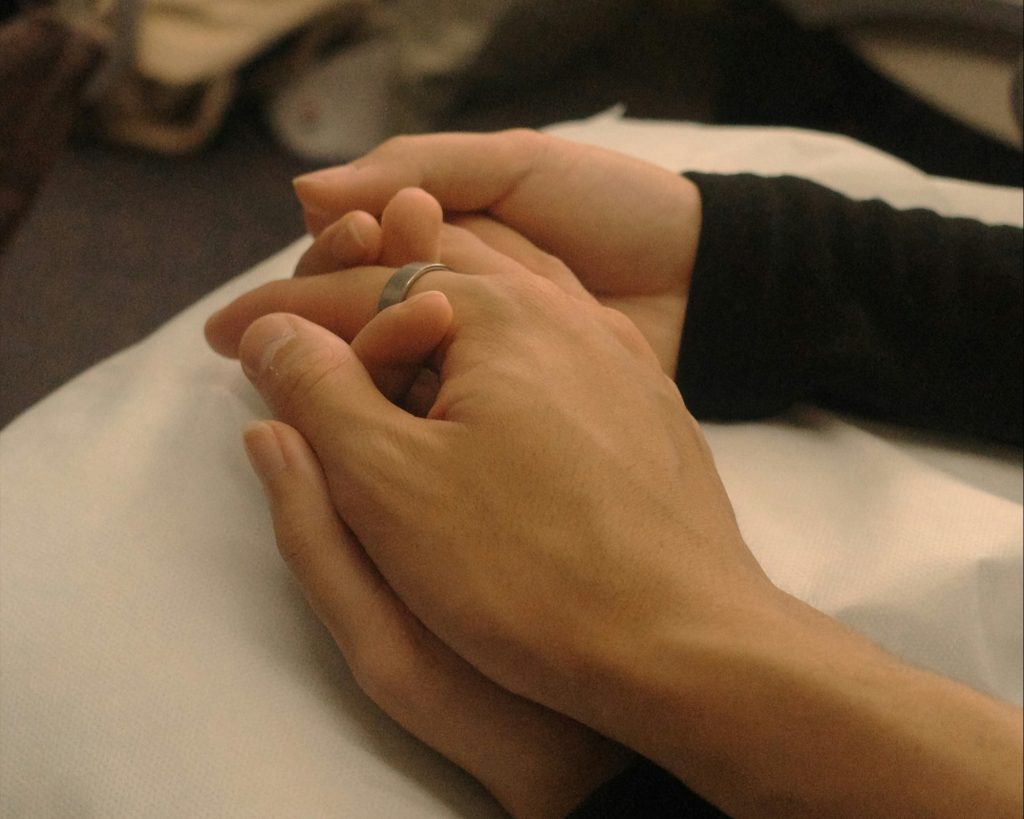
When you hear the word trauma, do you picture earthquakes or train crashes? Many people do. But trauma can also be the small moments when your mother dismissed your feelings and carried on with her work, leaving you alone with emotions far too big for a child to hold on their own. Trauma can be the moment at school when you were put on the spot, got the answer wrong and everyone laughed. Or the sinking feeling of wearing the wrong clothes to a party and realising you do not fit in. These moments of fear and alarmed aloneness leave traces in the nervous system.
I grew up as the youngest of five, with a father who had lived through acres of alarmed aloneness himself. He lost his favourite brother unexpectedly and was called into the corridor at boarding school to be told the news, then sent straight back into class.
After he left school he spent years as a Captain in the Burma jungle during the second world war. He had nightmares for decades afterwards. Nowadays we’d call it PTSD, but there was no help for him or a whole generation then.
There is no blame here. My parents did the best they could. But warm attunement was not something they knew or practised with me. I shared a bedroom for years with a sibling who tried daily to ‘toughen me up’. So I have plenty of small, and for me huge and multiple moments of trauma I have been working through.
“When I discovered how trauma fragments the brain, and how relational warmth can rewire it, everything changed.” Sarah Peyton
Resonance work has been a series of conversations with Sarah Peyton since 2008, grounded in what neuroscience shows actually helps the brain heal. Sometimes I’d arrive on a call and not know what I was bringing. I’d bounce from one memory to another, and she consistently held space for my deepest truth and stayed with me. My face might flush with shame and embarrassment. I might feel incredibly young and lost. With exquisite care and gentleness she accompanied me into my memories. Going back with someone safe and warm and embodied, was a game changer.
Sometimes it was like looking into a broken mirror, shards of memory sending light in different directions, nothing clearly reflected back. But piece by piece I was held with exquisite warmth. Little Lucy you make sense. Of course you feel and act as you do, given what you lived through and the survival structures your brain built to get me through childhood.
Did I ever tell you about my brother sprucing up the family bike for my birthday? He took it for a test ride, fell off, got a huge egg on his head and scraped and bent my new birthday bike. Everyone rushed to care for him, rightly so, but no one tended to my disappointment. I was labelled selfish for caring about the bike and wanting attention. But I was hurt, invisible wounds with a crash of disappointment and alarmed aloneness – emotional wounds are real too. My birthday dream for a good bike ride was dashed in the mud and no one was with me, no one tended to my experience then or afterwards.
This is where resonance can be life‑saving. Being accompanied back through time and space lets us revisit bewildering moments like this and gather up the pieces. We get to receive what mattered to us, what we didn’t get then, and our brain can finally repair itself, one fragmented memory at a time with resonance. We get to defrost these strands of trauma together, and feel the feelings that were put on hold, frozen or stuffed down at the time. And together we come back safely to present day, bringing the little one with us, integrating the memory and updating our memory banks and brain cells.
Nowadays when I remember that birthday bike moment, I no longer feel the gut‑twisting wrench of disappointment caked in shame. I feel tender compassion for me and for my brother and parents. The ‘live wire of unprocessed trauma’ no longer stabs me as this memory is now filed under ‘lived history’ and a loop in my brain is closed.
I wonder how many loose live wires or open loops you carry in your own body and brain? Do you sometimes disconnect from your feelings, put on a brave face, or say what you think someone wants to hear instead of your truth? Of course! This is survival. Yet these habits mask our authentic aliveness. They cost energy to keep parts of us stored or frozen. They keep the FEAR circuit switched on long after the danger has passed.
Fear is a useful brain response. It tries to keep us safe. It grips us before we have a chance to think. Reactivity in the face of a sabre‑toothed tiger meant survival. So of course the thinking brain goes offline. But if we live ‘as if’ we are in constant danger when we are not, we cannot think clearly. We cannot find our own solutions. We do not have all our life energy for living life now.
The answer is not necessarily to seek someone else’s strategy or opinion. What if you are not a problem to be fixed? What if instead you get resonance, understanding and an imaginary time travel machine and a trusty travel attuned resonant companion? When someone meets you with warmth and aims for a certain accuracy of really understanding you, your nervous system shifts out of fear and freeze. Your thinking brain comes back online. You can see calmly and clearly again. You can find your own ways forward.
I believe we all know what we need, once we have enough resonance to help our brains calm down and rewire.
The experience of being accompanied when you were not met in the moment, can be life enhancing. Our brains can repair and heal at any age.